


From First Lineto Pro-Level Craft
Anyone can buy tattoo equipment. NeedleDojo teaches you what to do next: a complete training OS that turns a machine you do not know how to use into a craft you can prove, one scored session at a time.
No card. Waitlist members get first access and keep their launch rate for twelve months.
- Learn
- Watch
- Practice
- Upload
- AI Review
- Retry

Skill Progress
This week- Line work80
- Shading65
- Packing70
- Composition60
- Color theory50
Consistency is your edge. Mastery is built daily, not in single long sessions.
Stencil Preview
Rose v3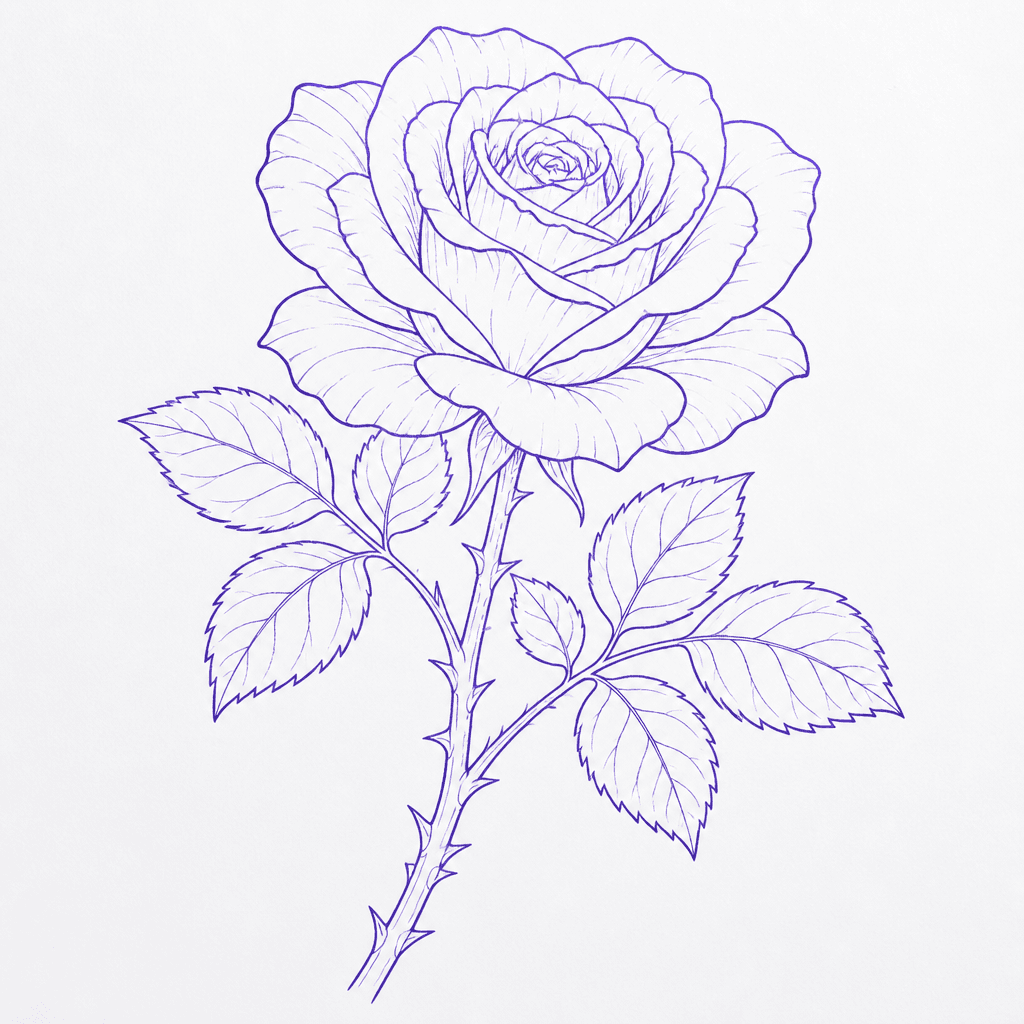
Practice Review
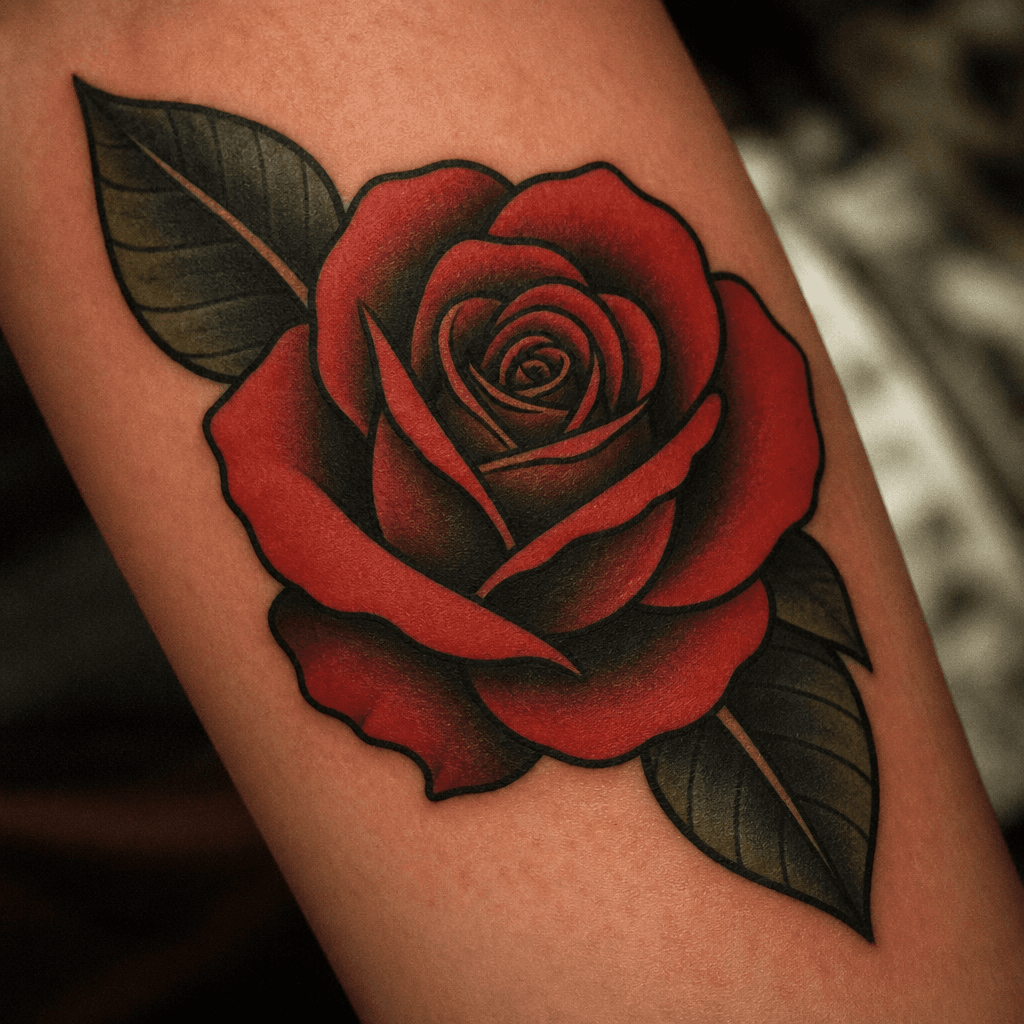
Rose, line work
Reviewed 2 hours ago
Good controlClean lines overall. Slow the pull on the outer curves.
Printer
Online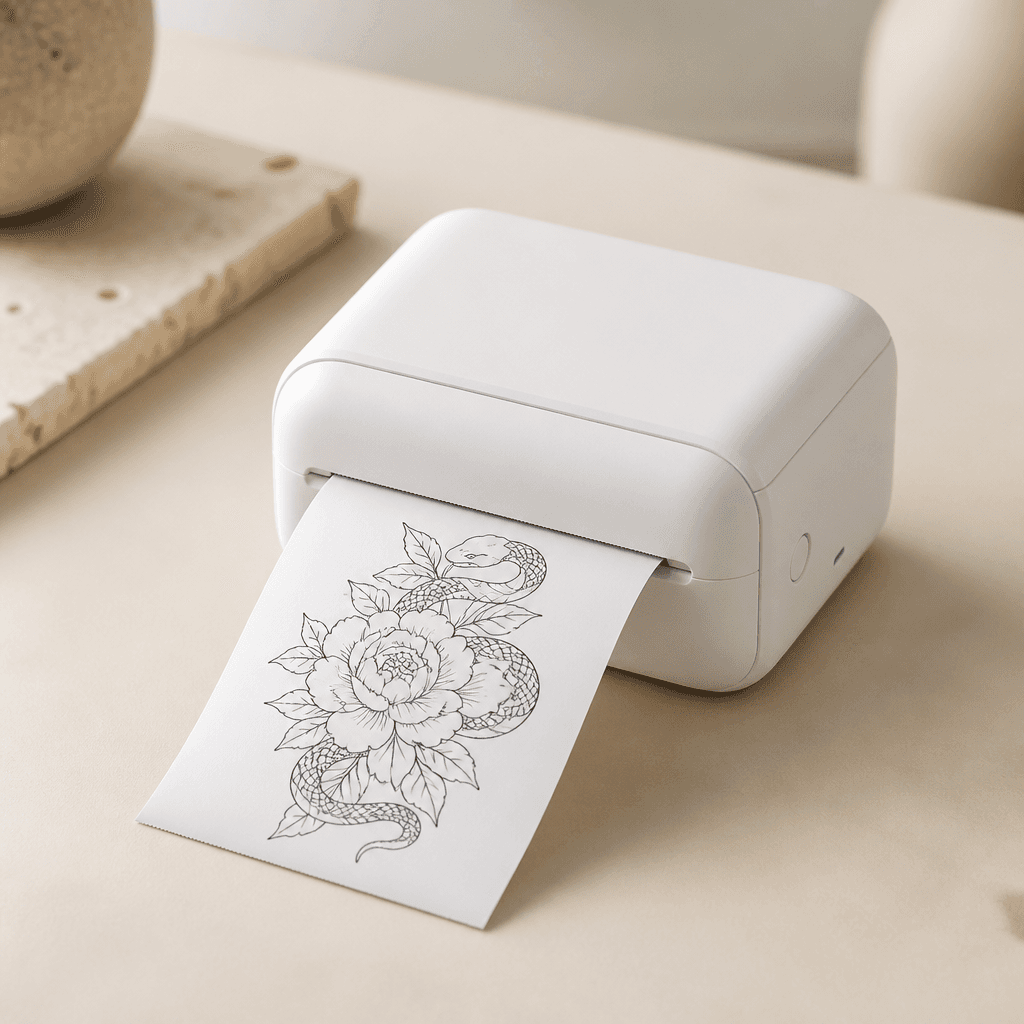
- Model
- Phomemo M08F
- Status
- Ready
- Paper
- 80%
- Stages in the curriculum
- 12
- Scored skill nodes
- 26
- Metrics on every review
- 8
Who it is for
Four ways people arrive. One path once they do.
NeedleDojo is not a course for people who already know. It is the operating system for everyone who bought the kit and then sat there.
- 01
You just unboxed a kit
Machine, printer, practice skin, no idea which end to start from. Stage zero identifies the gear and writes week one tonight.
- 02
You have been self-teaching
A year of YouTube and the lines still wobble. The coach names the habit, not the vibe, and puts a drill on it.
- 03
You are in a shop
An apprenticeship teaches the floor. NeedleDojo fills the hours between clients with scored drills your mentor can actually see.
- 04
You are coming back
Time off the machine shows. A readiness plan rebuilds the fundamentals you lost without making you sit through beginner videos.
The wall
Anyone can buy tattoo equipment. Almost nobody is taught what to do next.
Tutorials are scattered. Feedback is nonexistent. Progress is invisible. Stencils fail for reasons that have nothing to do with your hands. NeedleDojo closes all of it in one workflow.
You bought a machine and hit a wall.
Stage zero asks what you own, identifies the printer and the machine, and writes a curriculum around that exact bench. No generic beginner course pretending every kit is the same.
See the curriculumTutorials never look at your work.
Photograph the sheet. The coach scores eight metrics, marks the failures on the image, and prescribes the one drill that closes the gap before your hand cools down.
See how scoring worksYou cannot tell if you improved.
Every reviewed session feeds one skill graph. Levels, streaks, and week-over-week deltas make progress a number, not a feeling you argue with yourself about.
See the analyticsStencils fail and you blame your hands.
Faded lines are often a density problem. Wrong size is a scale problem. Mirrored lettering is a software problem. The studio drives the printer so those stop being mysteries.
Open the studioYou want a specific tattoo and are not ready.
Upload the piece. NeedleDojo rates the difficulty against your current level, then builds the weeks of drills that close the gap instead of handing you a stencil you will butcher.
See Learn This TattooThe rest of the job was never taught.
Consultations, placement, hygiene, sharps, licensing. Stage 11 covers the work around the needle, and it is honest about what software cannot authorise.
Read the limits
Category lock
Not AI tattoo software. A complete tattoo training OS.
The distinction matters. One product replaces the artist. The other trains them until the work holds. NeedleDojo is the second, on purpose.
What it is
- A complete tattoo training operating system, from equipment intake to professional workflow.
- A closed loop: learn, print, practise, upload, score, retry. Every day.
- Hardware-aware. It talks to the thermal printer on your desk.
- Evidence-based. Your improvement is a graph, not a pep talk.
What it is not
- An AI that tattoos for you, or a stencil generator that replaces the artist.
- A licence, a certification, or permission to work on a person.
- A video course with a progress bar and no one looking at your sheets.
- A promise that an app can supervise the jump to human skin.
The loop
Learn. Watch. Print. Practice. Upload. Review. Retry.
Video courses give you information. NeedleDojo gives you a closed feedback loop, which is the only thing that has ever produced a skilled artist. This is the product. Everything else hangs off it.
- 01
Learn
Watch the lesson written for the machine on your bench, not a generic starter kit.
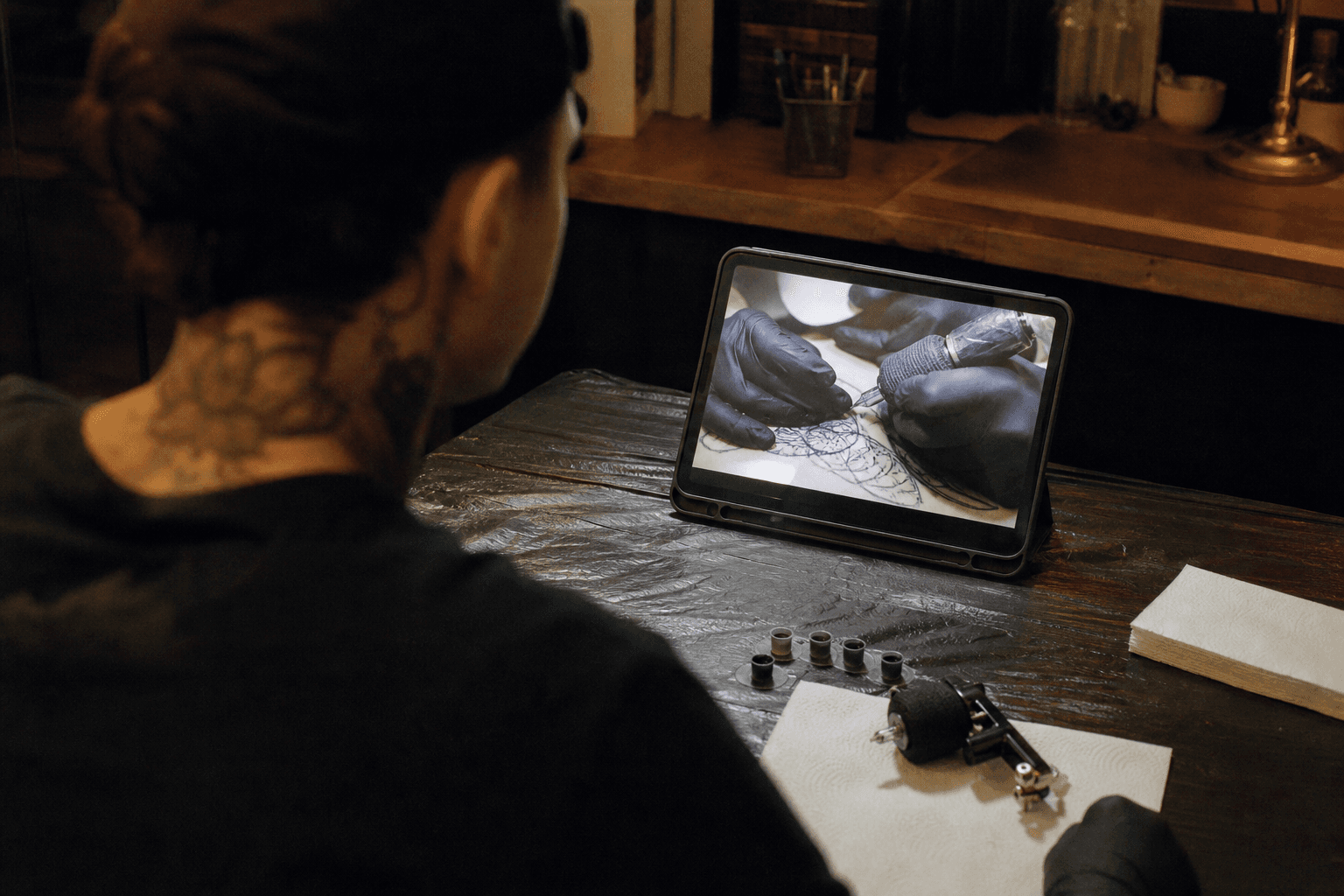
- 02
Watch
See the pull at working speed, then slowed, with the hand position marked.
- 03
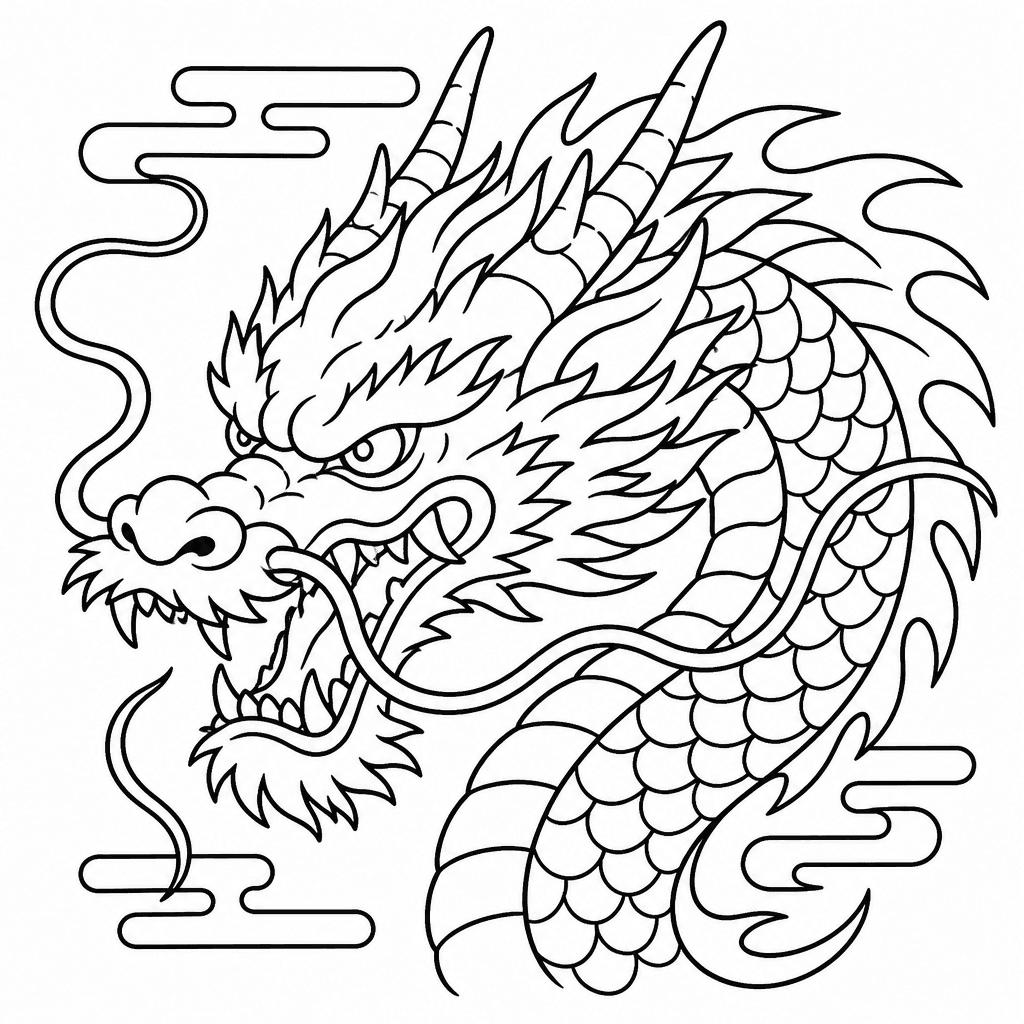
Print
Today's drill leaves the app as a correctly scaled, mirrored thermal stencil.
- 04
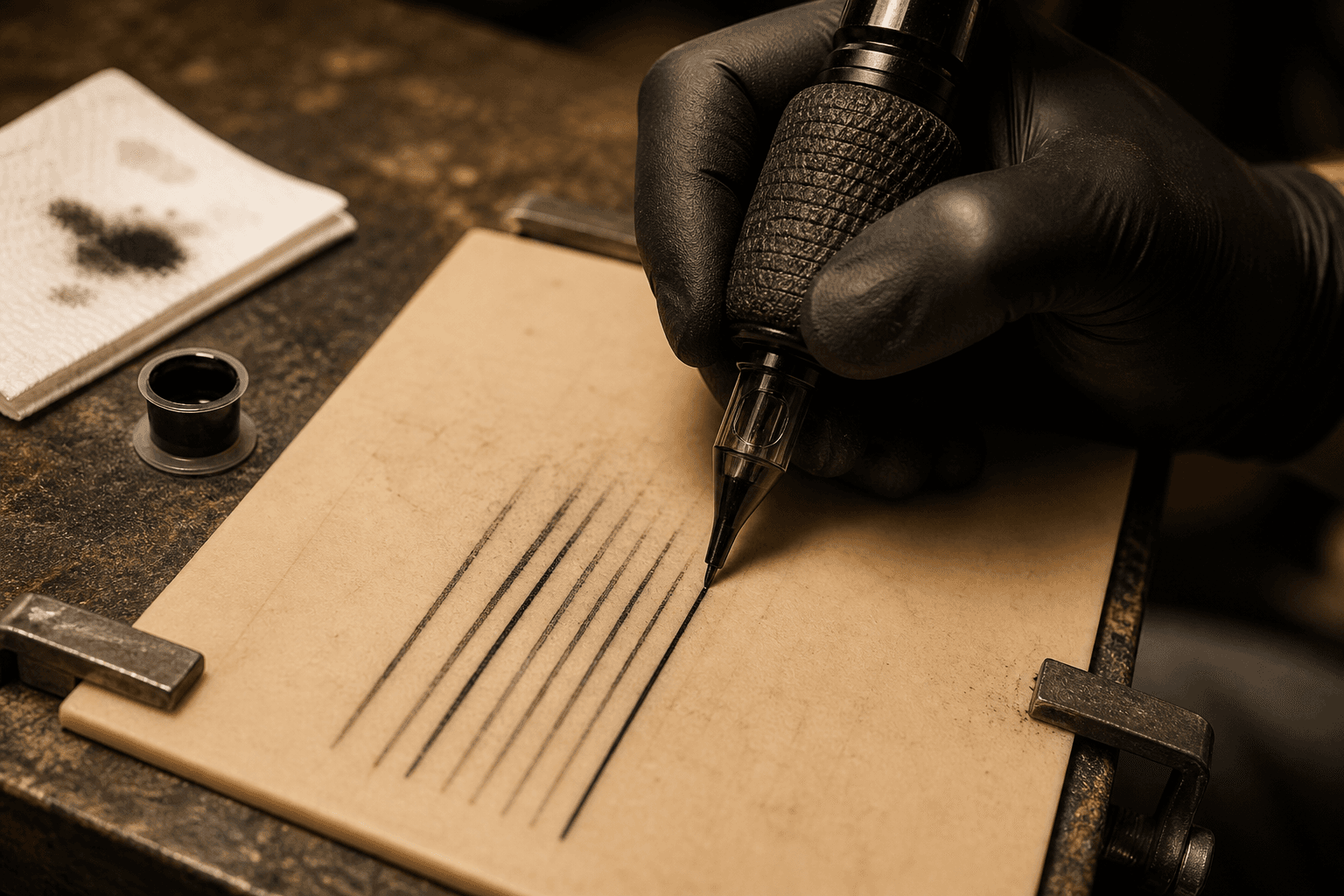
Practice
Train on synthetic skin. Straight lines before roses. Speed, entry, exit.
- 05
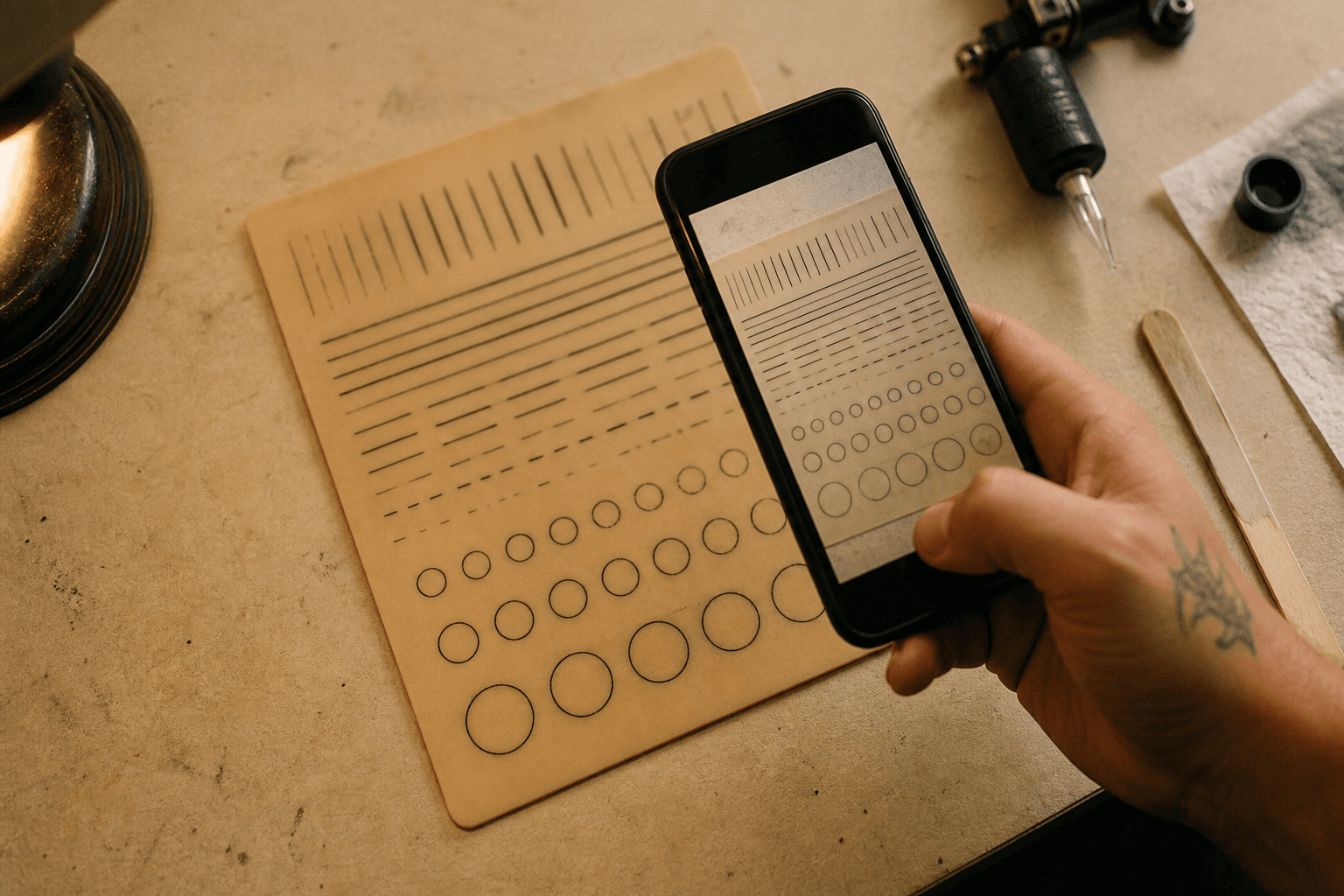
Upload
Photograph the sheet from your phone. Any light. The coach finds the stencil underneath.
- 06
AI Review
Eight metrics scored, failures marked on the image, the next drill attached.
Good progress82/100 - 07
Retry
Tomorrow's session rewrites itself around the gap. Nothing here is random.
That cycle runs five days a week. The curriculum reorders itself every night around the weakest metric from the last review.
The home screen
Open the app. Today's session is already written.
Fifty-two minutes, assembled overnight from what you practised, what improved, and what you have been avoiding. Nothing on this screen was chosen by you, and nothing on it is random.
Day 13
Phomemo M08F readyArtist level
12
Apprentice
2,140 / 3,000 XP
Skill breakdown
- Linework76
- Curves82
- Packing63
- Shading48
- Colour31
- Stencil design71
Today’s training
52 minutes, assembled overnight
- 01S-curve control10 min
- 02Black packing15 min
- 03Small rose25 min
It knows the bench
Phomemo M08F is online, paper at 80 percent, density calibrated. Print today's sheet is one press.
It knows the gaps
Packing is 63. Shading is 48. Those two blocks in today's session are not a coincidence.
It knows the goal
You uploaded a tiger last month. The small rose is a node on the way there, not a random flash sheet.
Then the loop runs
Print. Practise. Upload. The coach scores it before your hand cools down. Tomorrow is rewritten.
Stage 00
Tell it what you own. It writes the curriculum around that bench.
Generic beginner courses assume a kit you do not have. NeedleDojo identifies the machine, the cartridges, the printer, and the practice skin, then starts you there.
It identifies the bench
Machine, cartridges, stencil printer, inks, practice skin, power supply. Detection first. Curriculum second. You are never taught a device you do not own.
Lessons name your hardware
You own a Phomemo M08F. Here is how to load the paper. You selected a pen machine. Here is hang, voltage, and give for that stroke length.
The printer is in the loop
Today's assigned drill becomes today's stencil in one press: mirrored, scaled, density-tuned. No vendor app, no guesswork on inches.
Verified with Phomemo, HPRT, Brother, and common rebadged thermal units. Anything else still exports at correct scale.
The curriculum
Twelve stages, from bare bench to professional workflow.
Stages zero through six are compulsory. From stage seven the path branches with your choices: skill tree, style trees, and the piece you actually want to make. Open any stage for the lesson list.
The signature
Learn This Tattoo. Not a stencil. A training plan.
Upload the piece you eventually want to make. Instead of handing you artwork you are not ready for, NeedleDojo tells you how it will train you until you are.
- 01Your goalA Japanese tiger, half sleeve, colour.
- 02Skill analysisNine techniques across four branches.
- 03Current abilityYou are level 8. This piece reads as level 17.
- 04Skill gapPacking consistency and colour transitions.
- 05Personal training planEleven weeks, four sessions a week, 38 drills.
- 06Generated practice sheetsEvery drill printed from your own printer.
- 07Reviewed and adjustedThe plan shortens or extends with your scores.
- 08Final practice pieceThe tiger itself, on synthetic skin, scored.
Here is how we’re going to train you until you’re ready for it.
That sentence is the product. A stencil is a file. A readiness plan is a reason to open the app tomorrow.
Walk the full pathStencil Studio
Design. Refine. Mirror. Size. Print. Without leaving the app.
Most training products stop at video. The studio is a working stencil pipeline that talks to the printer on your desk. Drag the sliders. This is the engine, running in the page.
Shadow Depth prints the shade plate: pepper, whip ticks, and hatch in the recesses. Zero is linework only. One hundred is transfer-ready.
You stay the artist
The studio proposes lines and explains them. You approve, reweight, or redraw. It will not generate a better tattoo and call that training.
Six controls, each with a reason
Outline, fine detail, shadow, thermal density, negative space, stipple zones. Every slider is a stencil-construction decision with a name.
Prints at the size you meant
Device-aware density and scale, so a 4-inch design arrives 4 inches wide, mirrored for transfer, on the paper you loaded.
AI Coach
Objective scoring on every line you pull.
A score with no instruction is useless. Every flagged issue arrives with the drill that corrects it. The coach will not flatter you, certify you, or tell you that you are ready to tattoo a person.
Overall
Skill breakdown
Last session- Line consistency81
- Smoothness72
- Start / stop67
- Packing61
- Curves76
- Symmetry83
The prescription
Slow the hand entry on outer curves. Two passes on the lower petal sat shallow. Tomorrow: eight minutes of curve control, then a packing drill.
All eight metricsProgress
Practice you can actually prove.
Most artists cannot answer a simple question: are you better than you were in March? The tracker answers it with data instead of a feeling.
Skill trajectories
8 weeks- Linework
- Stencils
- Shading
- Packing
- Color
Skill score (0 to 100) by practice week. Sample artist data.
- Day 1
Shaky first lines
Overall 22
- Day 30
Recognisable small pieces
Overall 48
- Month 3
Advanced practice work
Overall 71
- Month 6
Portfolio development
Overall 88
Illustrative trajectory from early access artists practising four sessions a week. Individual results vary.
Community
Practice alone. Improve together.
One brief a week, scored before it is seen. The leaderboard reflects measured craft, not who has the most followers. Critique names a specific line or it does not get posted.
This week's brief
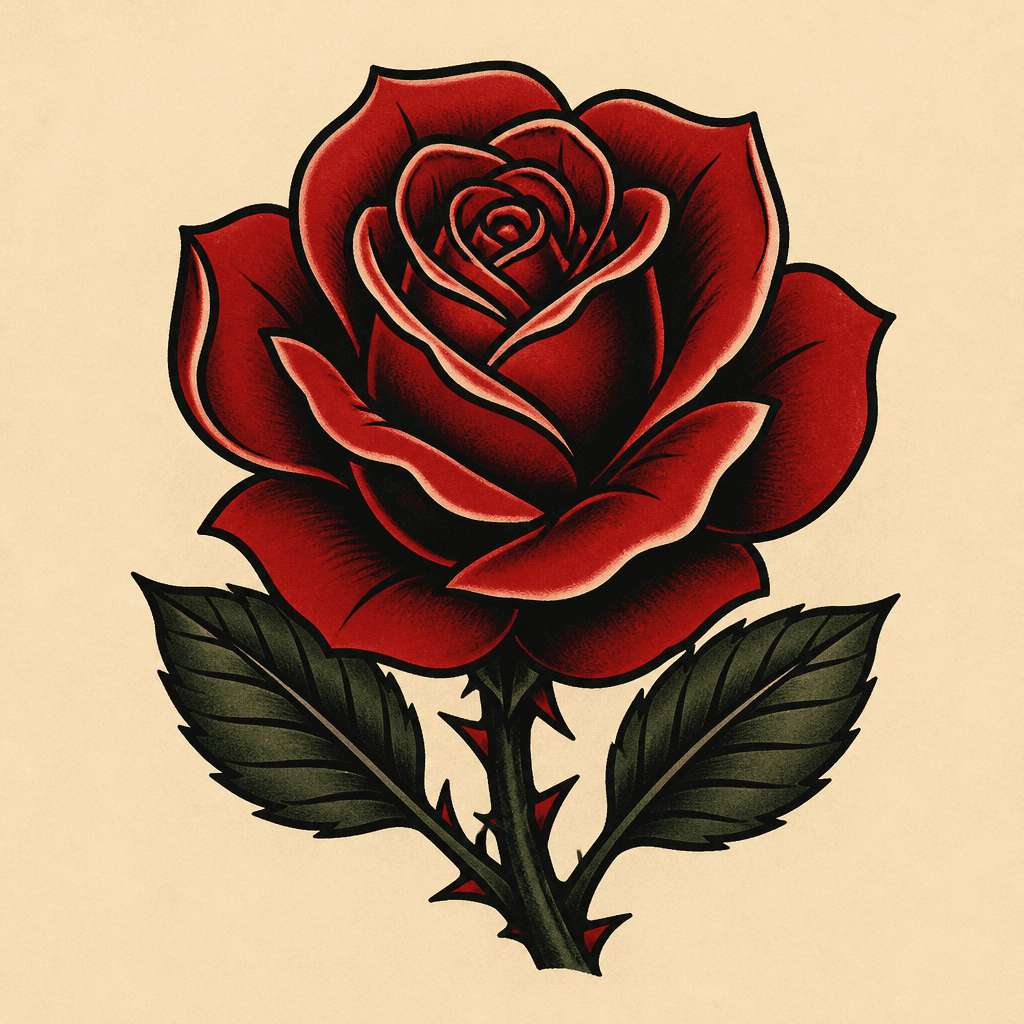
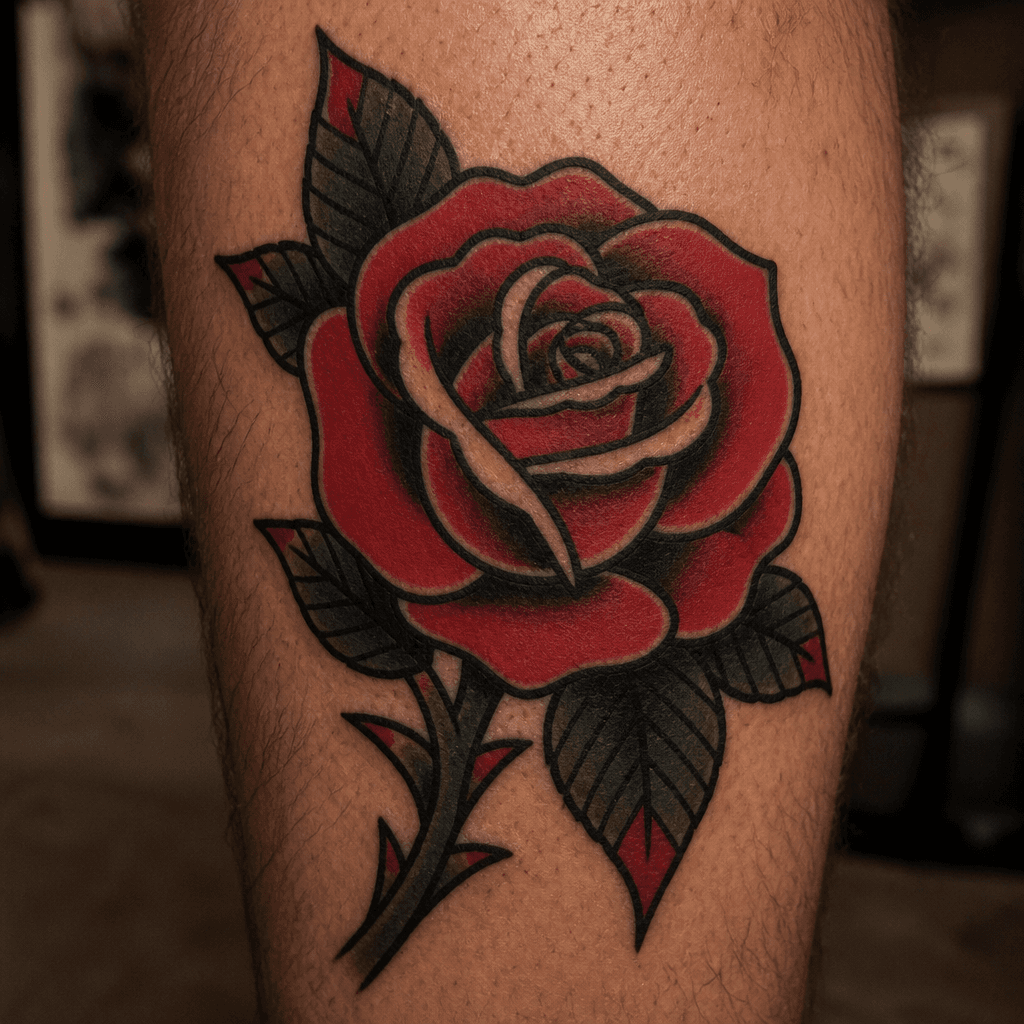
5 days leftNeo Trad Rose
Bold colour, black outlines, four inches maximum. 1,247 artists working the same problem.
The OS
One platform. Six rooms in the dojo.
Each module is a full product. The homepage shows the spine. The inner pages show the depth.
Compared to
What people try instead, and why they stall.
You already have options. They fail at different points in the same job: getting better on purpose.
YouTube
- Infinite videos, zero sequence
- Nobody looks at your sheet
- You pick what feels fun
- Progress is a feeling
Online courses
- Fixed 30-day syllabus
- Feedback in a Facebook group, maybe
- Not written for your printer
- Certificate of completion, not craft
AI tattoo apps
- Generate a design, skip the skill
- No scoring, no curriculum
- You remain the bottleneck
- Trains the software, not the artist
NeedleDojo
- Twelve stages sequenced to your gear
- Eight metrics, marked up, same day
- Tomorrow's session written from last night's scores
- A six-month record you can actually show
From the benches
The transformation is the marketing.
Early access artists, practising four sessions a week. These are not studio-owner endorsements. They are people who used to guess.
“I had the machine for a year and never got past shaky lines. Six weeks of scored drills did what a year of YouTube could not.”
Ari Kovach
Level 11, shading focus. Early access.
“The printer bit alone paid for it. I was wasting sheets on faded lines and calling it a skill problem. It was density.”
Jules Rahman
Level 9, fine line. Shop apprentice.
“Learn This Tattoo is the feature I open the app for. I uploaded a sleeve I wanted and it told me I was nine levels short, then built the plan.”
Nia Pell
Level 14, neo traditional.
“I run two apprentices. I can see their scores without standing over the bench. That is the first training tool I have trusted.”
Marcus Hale
Studio plan, three seats.
Launch pricing
Pay for the dojo, not for lessons.
One subscription covers training, the studio, the coach, and the community. No per-review credits. No locked stencil packs. Nothing is charged until we open, and the waitlist locks your rate for twelve months.
Apprentice
$79per month
The full twelve-stage curriculum, the printer, and a monthly review allowance.
See what is includedArtist
$139per month
The whole dojo, uncapped. Style trees, analytics, and Learn This Tattoo.
Reserve This RateStudio
$399per month
Five seats included, then $10 per extra seat.
A mentor dashboard across every bench and the professional workflow module.
See what is included
Prices in USD, billed monthly at launch. No card is taken to join the waitlist. Apprentices with a shop reference and full-time students get Artist at half price. History and stencils export on every plan.
Questions
The seven things everybody asks before they start.
Do I need a tattoo machine to start?
No. Stages 00 to 05 cover equipment, the printer, design, and stencil application. The machine comes out at stage 06, on synthetic skin, once you know which one suits how you work.
Will this let me tattoo people?
No. NeedleDojo trains you on synthetic practice skin. Working on a person requires hands-on training, bloodborne pathogen certification, and the licences required where you live. Stage 11 covers that process. It does not replace it.
What printers does it drive?
Phomemo, HPRT, Brother, and common rebadged thermal units are verified in-house. Anything else still gets a print-ready file at correct scale, plus calibration guidance in the Stencil Printer Academy.
How is this different from an AI that draws tattoos?
Those products replace the artist. NeedleDojo trains the artist. The studio proposes lines and explains them. You approve, reweight, or redraw. The coach scores your hand, not the model's output.
What if I already have bad habits?
That is the typical starting point, not a disqualification. The coach diffs you against your last five sessions, so the first job is naming the habit. Then the curriculum reorders around it.
Can I cancel and keep my work?
Yes. Export your full review history, scored images, and stencils at any time, on any plan. There is no hostage archive.
When does it open, and what does the waitlist get me?
We are in private build. Joining costs nothing and takes no card. Waitlist members get in before general access and keep the launch rate they signed up at for the first twelve months.
Where the software stops
NeedleDojo trains you on synthetic skin. It does not qualify you to tattoo a person.
Working on a person requires hands-on training, bloodborne pathogen certification, and the licences required where you live. Software cannot supervise that jump.
Stage 11 teaches hygiene, sharps, cross-contamination, and how to find the specific requirements in your region. It is education, not authorisation. We will always recommend a supervised apprenticeship for the transition to human skin.
Read the full safety positionEverything You Need.All In One OS
No more switching between a video course, a drawing app, a printer driver, and a notebook. One workflow, from your first straight line to a portfolio you would show a studio owner. Get told the day it opens.
No card. No spam. Waitlist members get founding pricing and first access.
Compare Plans